Thursday, 22 December 2016

Silent Partner Anti-Snoring Sleep Mask


Get rid of the snoring noise forever with the Silent Partner Anti-Snoring Sleep Mask. Designed with an incredibly comfortable design, this sleep mask uses the power of active noise cancellation to quiet snoring noise.


The noninvasive design will rest on your face and offer your partner as well as yourself a perfect night’s rest. This sleep mask will not try to cure your snoring noise; instead, it will use patented sub-wavelength technology to cancel out the snoring noise.


 That way, you will get to withstand a normal sleep routine without letting the snoring noise getting in the way.

The sleep mask has a cozy design that will blend easily with your regular sleep cycle and will ensure to give you the perfect night’s sleep you desire. An Anti-Snoring Sleep Mask that won’t let snoring spoil your partner’s sleep anymore!


Get it for $81.00.


Sunday, 18 December 2016

Five tips for improving Linux security

1: Take advantage of the keyring

To many, this is an annoyance. You log in to your machine, your machine requests a connection to a network (or LDAP server, etc.), and you have to enter your keyring password. The temptation is to disable this feature by giving it an empty password and dismissing the warning that you’ll be transmitting unencrypted information (including passwords). This is not a good idea. Although you might think it a hassle, this feature/functionality is there for a reason — to encrypt sensitive passwords when they are sent over the wire.

2: Enforce user password update

If you run a multi-user environment (as Linux is wont to do), you should make sure that your users change their passwords every so often. To do this you use the chage command. You can check the expiration with the command sudo chage -l USERNAME (where USERNAME is the name of the user you want to check). Let’s say you want to expire a user’s password and make him change it upon next login. To do this, you could issue the command sudo chage -E EXPLICIT_EXPIRATION_DATE -m MINIMUM_AGE -M MAXIMUM_AGE -I INACTIVITY_PERIOD -W DAYS_BEFORE_EXPIRATION (where all options in CAPS are user defined). For more information on this command, see the man page (issue the command man chage).

3: Don’t blindly disable SELinux

Similar to the keyring, SELinux is there for a reason. SE stands for Security Enhanced and it provides the mechanism that controls access to applications. I have read of a number of “solutions” to problems that involved disabling SELinux. If this is seen as a solution, it will only lead to more, uglier problems. If a particular program isn’t running properly, look into modifying an SELinux policy to fit your needs rather than disabling SELinux. If you don’t want to do this via the command line, you might want to check out a GUI tool called polgengui.

4: Don’t log in as root

It may sound as if I’m a broken record with this one, with good reason. I can’t stress enough that Linux users should NOT be logging in as the root user. If you need to do administration on a machine, log in as your regular user and either su to the root user or take advantage of sudo. When you log in as the root user, you effectively bypass a major security hurdle and allow access to systems and subsystems that normally wouldn’t be accessible when logged in as a standard user. Do not do this. Log in with your regular account. Period.

5: Install security updates quickly

There is a HUGE difference between the way Linux and Windows handle updates. Where Windows typically does an infrequent massive update, Linux does frequent smaller updates. Ignoring these updates can be disastrous if the right security hole is not patched on your system. You have to remember, some of those updates are in fact security patches and need to be applied immediately. Never ignore that icon indicating updates are available. And if you are using a GUI-less server, make sure you set up a cron job to check for updates or check them manually either daily or weekly. Stay up to date and you stay more secure.
source:- http://www.zdnet.com/

Wednesday, 14 December 2016

How Do I Update Ubuntu Linux Softwares Using Command Line?


 I have latest version of Ubuntu Linux LTS server. How do I update Ubuntu Linux for security and application fix/upgrades using ssh command line? How can I install updates via command line option?

Ubuntu Linux can be upgraded using GUI tools or using traditional command line tools such as:

  1. apt-get command – apt-get is the command-line tool for handling packages.
  2. aptitude command – aptitude is a text-based interface to the Debian GNU/Linux package system including Ubuntu Linux.

Ubuntu Linux server – Install updates via apt-get command line (option #1)

The commands are as follows:
=> apt-get update : Update is used to resynchronize the package index files from their sources via Internet.
=> apt-get upgrade : Upgrade is used to install the newest versions of all packages currently installed on the system
=> apt-get install package-name : Install is followed by one or more packages desired for installation. If package is already installed it will try to update to latest version.
First, open the Terminal application and type following two commands (Application > Accessories > Terminal).

Get update software list, enter:

Type the following apt-get command:
$ sudo apt-get update

Update software(s) i.e. apply updates and patches on Ubuntu Linux

Type the following apt-get command:
$ sudo apt-get upgrade
Please note that above two commands will fetch files from the Internets or local mirrors. The location of update pages is specified in /etc/apt/sources.list (repositories). You need NOT to make any changes to this file until and unless you need extra repositories for your setup.

Install kernel updates on a Ubuntu LTS server

Type the following apt-get command:
$ sudo apt-get dist-upgrade
If a new kernel installed, reboot the server:
$ sudo reboot

To upgrade individual software called foo type command:

$ sudo apt-get install foo
OR
$ sudo apt-get install apache php5 mysql-server

Ubuntu Linux server – Install updates via aptitude command line (option #2)

The syntax is as follows to Update the packages list:
$ sudo aptitude update
To actually upgrade the packages, type:
$ sudo aptitude safe-upgrade

Apply Ubuntu server updates over ssh based command line session

First, login to the remote Ubuntu server using ssh client:
$ ssh user@server-name-here
$ ssh vivek@server1.cyberciti.biz

Once your log into your server, run the following two commands:
$ sudo apt-get update
$ sudo apt-get upgrade

OR
$ sudo aptitude update
$ sudo aptitude safe-upgrade

OR
$ sudo apt-get update
$ sudo apt-get dist-upgrade

From the apt-get(8) page:
The dist-upgrade in addition to performing the function of upgrade, also intelligently handles changing dependencies with new versions of packages; apt-get has a “smart” conflict resolution system, and it will attempt to upgrade the most important packages at the expense of less important ones if necessary. So, dist-upgrade command may remove some packages. The /etc/apt/sources.list file contains a list of locations from which to retrieve desired package files.

Using Ubuntu Update Manager GUI tool

Ubuntu Update Manage the GUI tool. It works like Microsoft or Red Hat update manager i.e. you will see a little icon in the kicker bar/taskbar when there are updates. It will only appear when new upgrades are available. All you have to do is click on it and follow the online instructions. You can also start the GUI tool by Clicking System > Administration > Update Manager

A note about the latest version of Ubuntu Linux

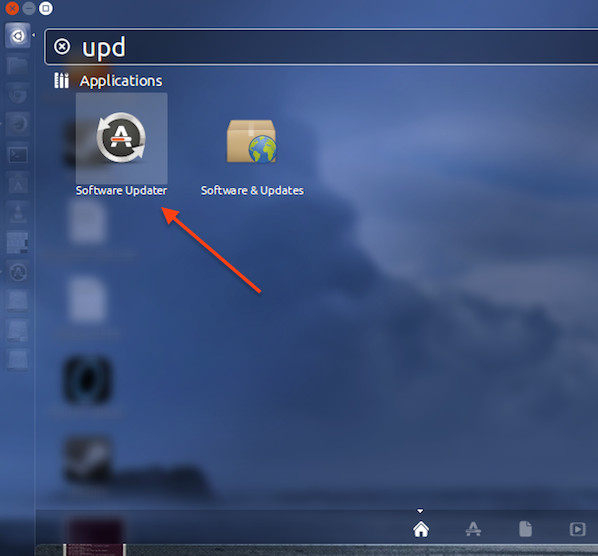
Press the Superkey (Windows key) > Type updater:
Fig.01: Ubuntu Launch the Software Updater

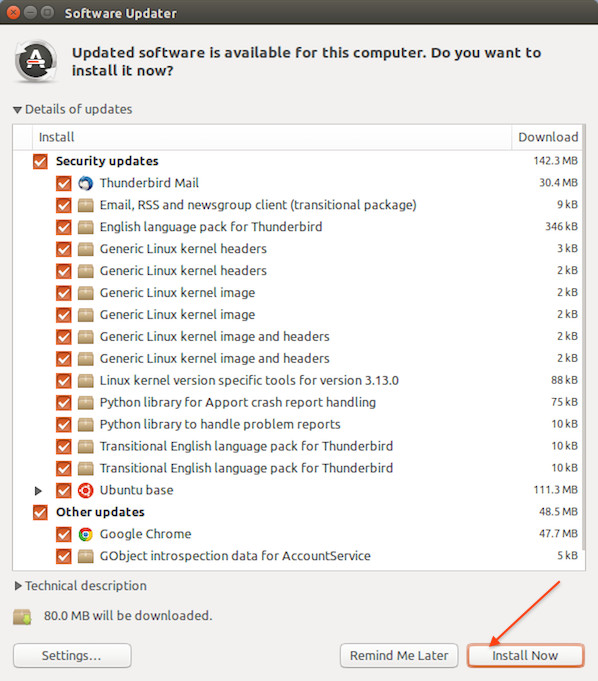
You will see the box as follows. Click on the Install now button
Fig.02: Installing updates on a Ubuntu Linux

Monday, 12 December 2016

Wacaco Minipresso GR

MINIPRESSO GR


$59.00 USD
Products shipped from Hong Kong. Customs taxes or duties may be charged to the recipient at import. For more information read the Shipping Policy.


DESCRIPTION

Minipresso GR is the perfect portable espresso machine. Compact, lightweight and versatile, you are free to use any coffee beans, which will give you more flexibility in trying new flavors. Grind at your convenience, you have more control over the preparation which will translate into being able of achieving perfect espresso shots that will please even the most perfectionist coffee lover.
Minipresso GR is your best choice to enjoy up to 50 ml of authentic espresso at home, in the office and on the go.


INSTRUCTIONS

Minipresso GR is simple and intuitive to operate. Add ground coffee to the filter basket with the help of the integrated scoop. Apply slight pressure to level the grind. Add hot water into the water tank. Finally unlock from its travel position the piston and pump a few strokes to pressurize and extract perfect espresso with generous crema.

Sunday, 11 December 2016

How to Grow Thick Eyebrows Naturally

Thick eyebrows have always been in demand. Thick, well-shaped eyebrows can enhance your look, while thin and sparse eyebrows can make you look older and dull.
Many people end up with eyebrows that are too thin because of over plucking, threading or waxing. Sometimes, thin eyebrows occur as a result of the aging process, nutritional deficiencies, poor cosmetic application or medical conditions like hypothyroidism, eczema and alopecia areata.
Medical treatments like chemotherapy and radiation can also cause hair loss, including on the brow line.
If your eyebrows are too thin, you can easily solve this problem with the help of some natural home remedies.

Here are the top 10 ways to grow thick eyebrows naturally.

1. Castor Oil

Castor oil is one of the most effective remedies to boost the growth of your eyebrows. It contains protein, vitamins, fatty acids and antioxidants that nourish the hair follicles and promote hair growth. Plus, it is helpful in resisting any microorganisms that hamper eyebrow hair growth.
  1. Soak a cotton swab in pure castor oil and apply it on each eyebrow.
  2. Massage gently with your fingertips for 2 to 3 minutes.
  3. Leave it on for at least 30 minutes or overnight.
  4. Wash it off with lukewarm water and a mild cleanser.
  5. Repeat once daily for a few weeks until you notice improvement.
Note: Stop using castor oil if it causes any irritation or burning.

2. Coconut Oil

To enjoy dense and impressive eyebrows, you can use coconut oil. The various proteins as well as nutrients like vitamin E and iron in coconut oil promote healthy and thick eyebrows. It can also help make your eyebrows darker.
  1. Put a few drops of warm coconut oil on your fingertips and apply it on your eyebrows.
  2. Massage gently for a few minutes to boost blood circulation.
  3. Leave it on overnight.
  4. The next morning, rinse it off with warm water.
  5. Do this daily for 1 to 2 months to notice changes in the thickness of your eyebrows.

3. Olive Oil

Olive oil is also good for your eyebrows. Being rich in vitamin E, olive oil can help your eyebrow hair grow faster and thicker. It will also help keep it dark-hued.
  • Massage your eyebrows with warm olive oil for 5 minutes before going to bed. Leave it on overnight, then rinse it off with warm water the next morning.
  • Alternatively, prepare a mixture with 1/2 teaspoon of olive oil and a few drops of honey. Apply it on your eyebrows and massage for a few minutes. Leave it on for 30 minutes and then wash it off with warm water.
Follow either of these remedies once daily until you get the desired results.

4. Onion Juice

Onion juice also aids faster and denser growth of eyebrow hair. The juice has sulfur that improves the production of collagen tissues required for proper eyebrow growth. Also, it strengthens the hair follicles.
  1. Grind 1 small onion and extract the juice.
  2. Massage this juice into the eyebrows for about 5 minutes.
  3. Allow it to dry on its own and then wash it off with a mild cleanser and cold water.
  4. Follow this treatment once daily for several weeks.

5. Egg Yolk

The hair of the eyebrows is made up of keratin protein, and egg is a great source of protein. Thus, it can help improve the health of your hair, which in turn will make your eyebrows thick.
  1. Break 1 egg and separate the yolk from the white part.
  2. Beat the yolk until you get a thick, creamy consistency.
  3. Apply it on each of your brows with a cotton swab.
  4. Leave it on for 15 to 20 minutes and then wash it off with cold water.
  5. Use this protein treatment once or twice a week until you are satisfied with the result.

6. Fenugreek Seeds

Fenugreek seeds can also help grow thick eyebrows. They are rich in protein as well as nicotinic acid and lecithin that promote hair growth. The seeds also help in rebuilding hair follicles.
  1. Soak 1 teaspoon of fenugreek seeds in water for at least 5 hours.
  2. Grind the soaked seeds into a thick paste, then add a little coconut oil or almond oil.
  3. Apply the paste on the brows just before going to bed.
  4. Leave it on overnight.
  5. Wash it off in the morning with warm water.
  6. Follow this remedy 2 or 3 times a week for 2 months.

Read more:Click Here

Saturday, 10 December 2016

5 Simple Ways To Control Hair Loss Due To Stress


Hair Loss Due To Stress 

As mentioned earlier stress induced hair loss is a common physical disorder. Telogen Effluvium is a common disorder that results in hair loss due to extreme stress. It is often brought on by severe financial worries, death of a loved one, childbirth or postpartum stress, career troubles, divorce or love life troubles and even illness and major surgery. Considering the duration of the hair growth cycle, most people begin losing hair weeks or months after the stressful event has occurred making Telogen Effluvium difficult to self diagnose. Listed below are some helpful steps to curb hair fall due to stress.

Effective Treatment of Stress Induced Hair Loss:

1. Consult a Doctor:

Often times managing stress is not as simple as deciding to stop being stressed out and effectively doing so. Acute stress may be hard to manage without professional help so it’s best to consult a doctor to be able to effectively chart out a plan to combat stress and its symptoms such as hair loss. There are effective stress medications that a professional could only prescribe that would make dealing with stress easier. Consult a doctor; it’s the primary step you should take to deal with acute stress

2. Distract Yourself from Stressful Thoughts:

Medications prescribed by the doctor are basically useless if you don’t mentally fortify yourself to deal with stress. The good news is hair loss due to stress can be easily reversed by distressing and leading a more relaxed lifestyle. Listed below are some effective tools you can equip yourself with to combat stress and hair loss caused by it.

3. Journal Writing:

Writing a journal has anecdotal evidence to prove that it is effective. Keeping a journal allows you write down all negative thoughts as a means of letting them go. Putting down your anxieties, worries and problems into your journal can be a cathartic means to deal with stress. Distressing effectively deals with stress induced hair loss.

4. Yoga:

Yoga has been known since ancient times to promote mental health and physical growth. Studies have shown that yoga can be highly effective when used as a tool to deal with stress induced hair loss.
read more:http://www.stylecraze.com/

Baking Soda Shampoo: It Will Make Your Hair Grow Like It Is Magic


We’ve all heard about the versatility if baking soda and we know that we can use it for cooking and cleaning, as well as in the treatment of a number of medical conditions, thanks to its healing properties. However, every day we find out something new about this amazing ingredient, making us love it even more.
Baking soda can be used to improve your hair quality and clean it thoroughly from any conditioner or shampoo remains, giving it a healthy shine just after a few treatments. You can use it instead of your regular shampoo and you’ll be amazed by the results.

You should definitely try the following baking soda shampoo, as it will enhance your hair, and make it shiny, healthy, and voluminous.
You might find it hard to wash the hair at the beginning, but over time, your scalp and hair will get used to it, and the final effects will amaze you.


Instructions:
In a small squeeze bottle, mix baking soda and water in a 1:3 ratio. Adjust the dosing according to the length of the hair. For instance, in the case of shoulder- length hair, you should use 1 tablespoons of baking soda, and 6 tablespoons of water.
You can apply this mixture to a dry or wet hair, from the roots to the ends of the hair. Leave it to act for a couple of minutes, and then wash it off with warm water. You may find it strange that it does not foam at the beginning, but you will get used to it.
Then, rinse the hair with a solution of apple cider vinegar and water, in a 1:4 ratio. You can add a few drops of your favorite essential oil. Make sure you apply it properly, tilt the head backward, in order to avoid any contact of vinegar with your eyes. You can prepare this rinse beforehand, and store it in a small squeeze bottle in the bathroom, and use it whenever needed.
This affordable, chemical-free method of washing your hair will provide fantastic effects after a few times!

source:http://www.healthyfoodelements.com/